The Causeway Coast: basalt, castle ruins and a rope bridge
Along the north Antrim shore, some forty thousand basalt columns, a cliff-top castle ruin and a swaying rope bridge sit within half an hour's drive of each other.
A coast built from lava
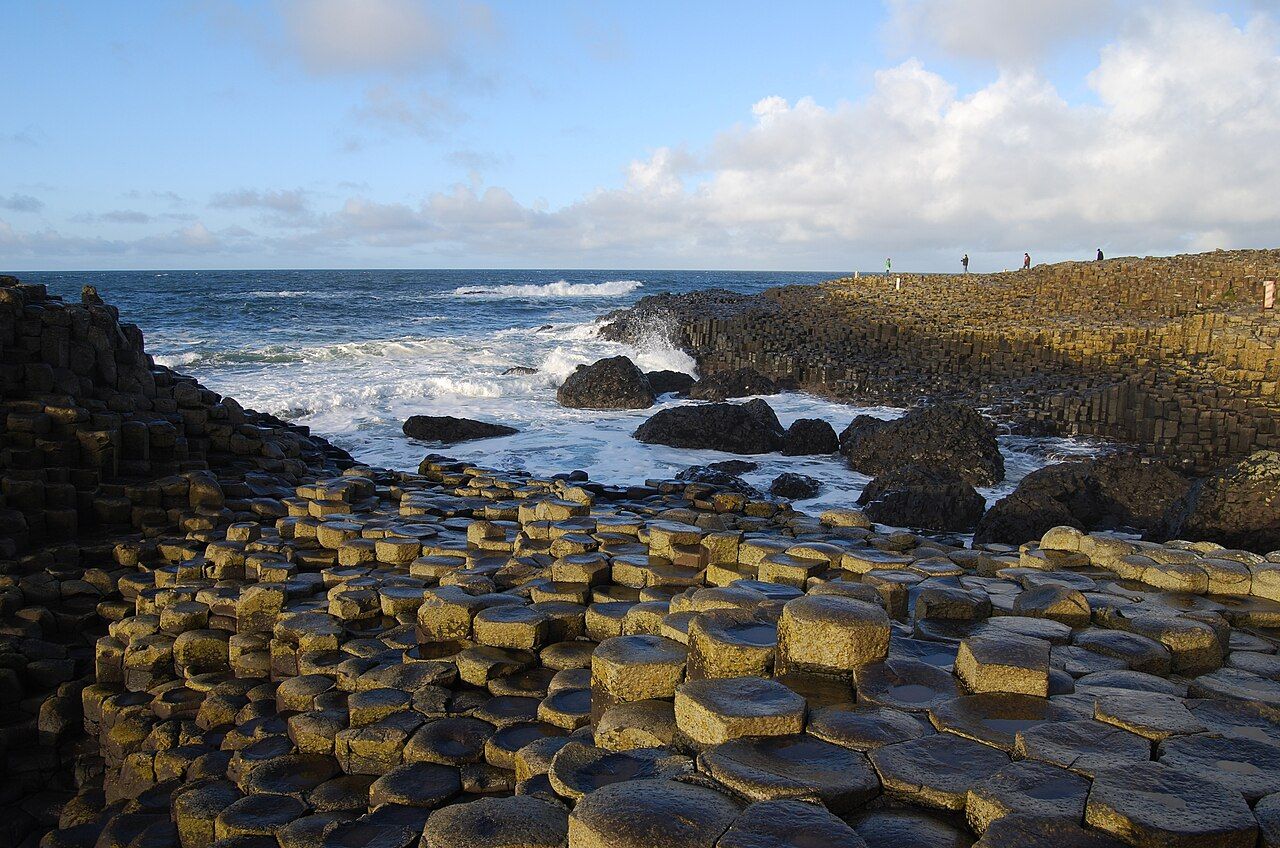
Around sixty million years ago, as the Atlantic was beginning to open, this part of the world was volcanic. Lava welled up through cracks in the earth and spread across the land in thick sheets. Where a flow cooled slowly and evenly, it shrank and cracked into columns, much as drying mud cracks into polygons, and the result was the basalt you see along the north Antrim coast. Over millions of years the sea cut into it, exposing layer after layer of dark rock above the white chalk that lies beneath.
The Causeway Coast runs roughly from Portstewart in the west to Ballycastle in the east, and its best-known places lie close together: the Giant's Causeway, Dunluce Castle, Carrick-a-Rede and Ballintoy. It is in Northern Ireland, so prices are in sterling and speed limits in miles per hour. You can see the highlights in a day, but a night on the coast lets you reach the Causeway early or late, before or after the crowds.
The Giant's Causeway
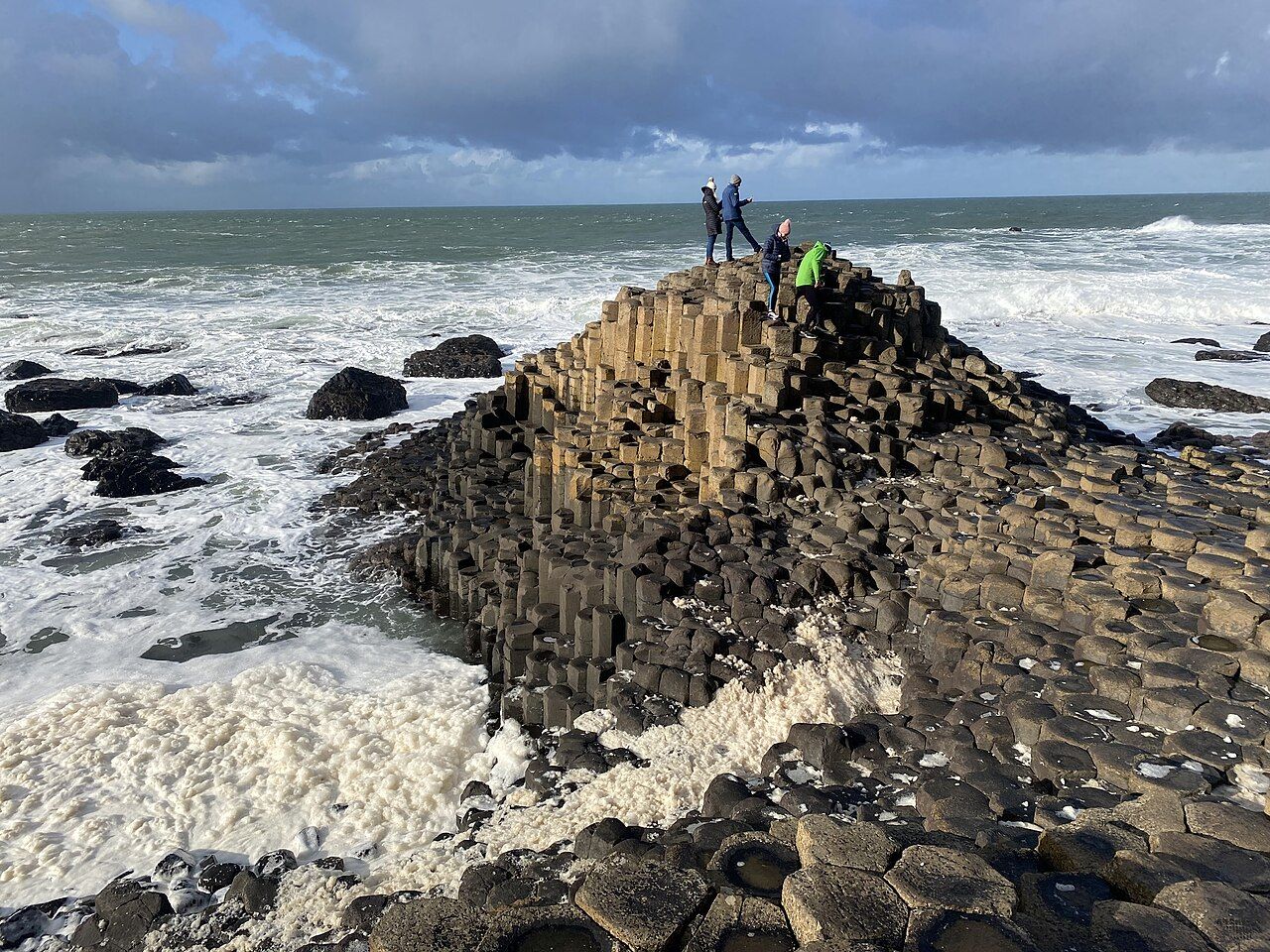
The Giant's Causeway is a sweep of some forty thousand interlocking basalt columns, most of them six-sided, stepping down from the foot of the cliffs into the sea. Some stand as tall as a house; others form a flat pavement of polygons that you can walk across, each stone fitting against its neighbours as if laid by hand. It was declared a World Heritage Site in 1986.
Legend gives it a different origin. The giant Fionn mac Cumhaill, Finn McCool, built the causeway across the sea to fight his Scottish rival Benandonner. When he saw how big his opponent was, Fionn ran home, and his wife disguised him as a baby in a cradle. Benandonner, seeing the size of the baby, fled in terror of the father, tearing up the causeway behind him. The same columns do appear again on the Scottish island of Staffa, so the story has a geological wink in it.
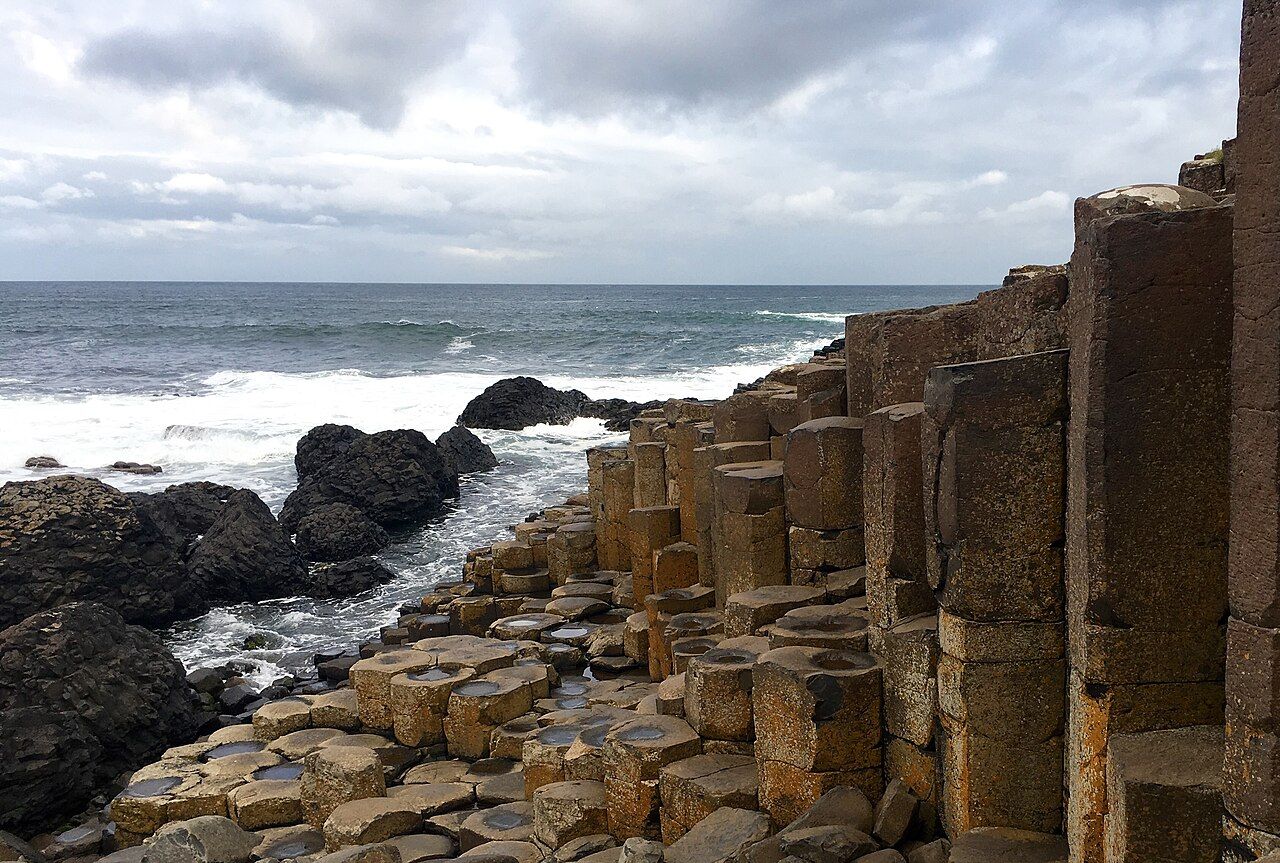

A modern visitor centre sits above the stones, with exhibitions on the geology and the legends, and its ticket includes parking and an audio guide. The paths to the stones are open to walkers, but parking near the site is tied to the visitor centre. From the centre, a road winds down about a kilometre to the main group of columns, the Grand Causeway, and a shuttle bus runs for anyone who would rather not walk back up the hill.
Beyond the Grand Causeway, look for the named formations: the Wishing Chair, a natural seat among the columns; the Organ, a tall bank of columns on the cliff face like pipes; and the Giant's Boot, a large rounded boulder. Higher up, a cliff-top path runs east along the headlands, and the Shepherd's Steps, a long flight cut into the slope, link the lower and upper trails. The columns are slippery when wet and the waves can be dangerous, so keep away from the edge of the sea, especially in winter swells.
Some stand as tall as a house; others form a flat pavement of polygons that you can walk across, each stone fitting against its neighbours as if laid by hand.
Dunluce Castle
A few kilometres west, Dunluce Castle stands on a basalt crag at the very edge of the cliff, joined to the mainland by a bridge over a deep cleft. The ruins span several centuries, from a medieval stronghold to a seventeenth-century house, and the castle passed from the MacQuillans to the MacDonnells, a Scottish-Irish clan who controlled much of this coast. A long-told story has part of the kitchen falling into the sea one stormy night, taking the cooks with it; historians doubt it, but it is hard to forget standing at the edge.
A detourBelfast in two days: shipyards, City Hall and the walls betweenBeside the castle, archaeologists have uncovered the streets and houses of a small town built in the early seventeenth century. The site is in state care, with an entry charge and seasonal hours. The best view is from the cliff path to the east, looking back at the ruins against the sea.

Carrick-a-Rede and Ballintoy
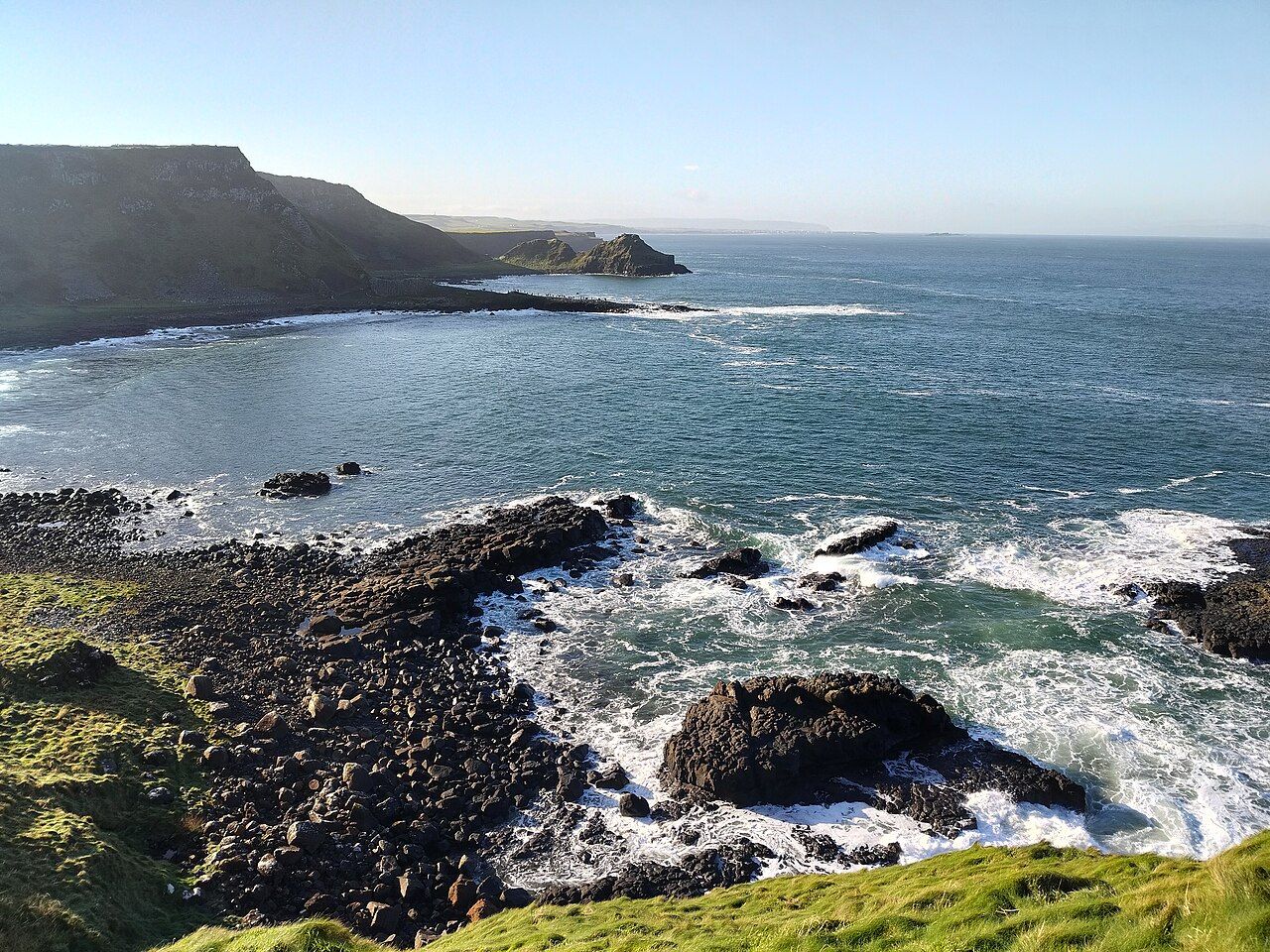
East of the Causeway, the coast road passes white-sand Whitepark Bay and arrives at Carrick-a-Rede. A rope bridge here crosses a narrow chasm, about thirty metres above the sea, to a small rocky island. Salmon fishermen put up the first bridge in the eighteenth century so they could set nets off the island; today's bridge is modern and solid, but it still sways gently underfoot. Crossing is by timed ticket, numbers are limited, and the bridge closes in high winds.
The walk from the car park to the bridge follows the cliff for about a kilometre, with views east to Rathlin Island and, on a clear day, the coast of Scotland. Even if you do not cross, the walk is worthwhile.
A little further west, a steep lane drops to Ballintoy Harbour, a tiny stone harbour among sea stacks and white limestone. It is a good spot for a picnic, though the lane down is narrow and parking is tight, so go early or late in the day.

The coast road, east and west
To the east, Ballycastle is a seaside town with a ferry to Rathlin Island, home to large seabird colonies in late spring and early summer. Beyond it, a narrow scenic road climbs over Torr Head toward Cushendun, one of the most dramatic drives in Ireland, but also one of the slowest. The main road south passes the Glens of Antrim, nine valleys running down to the sea, before reaching Belfast.
To the west, the resort towns of Portrush and Portstewart have long beaches and a lively summer atmosphere. Beyond them, Mussenden Temple, a small round library built by an eighteenth-century bishop, stands on the cliff edge at Downhill, looking over a long strand. Inland from the coast, the Dark Hedges, an avenue of old beech trees, draw crowds for photographs; the road beneath them is closed to cars.
Practical notes
Trains from Belfast and Derry stop at Coleraine, with a branch line to Portrush, and seasonal buses link the main sights along the coast. With a car, everything is within half an hour of everything else, but parking at the main sites can fill by midday in summer.
The weather here is changeable, and the wind can be strong at any time of year. Bring waterproofs and a warm layer even in summer. Arrive early at the Causeway, before the coach groups, and you may have the stones almost to yourself for a while.
Coming from the west, the drive from Derry along the coast takes about an hour, and the route from here to Belfast completes the fortnight's loop. If you are planning the order of stops, the fourteen-day plan shows where a night on this coast fits.