Dublin in the first two days
Start the fortnight on foot: Trinity's old library, the brick terraces and painted doors of Georgian Dublin, a walk along the Liffey, and the national museums that cost nothing.
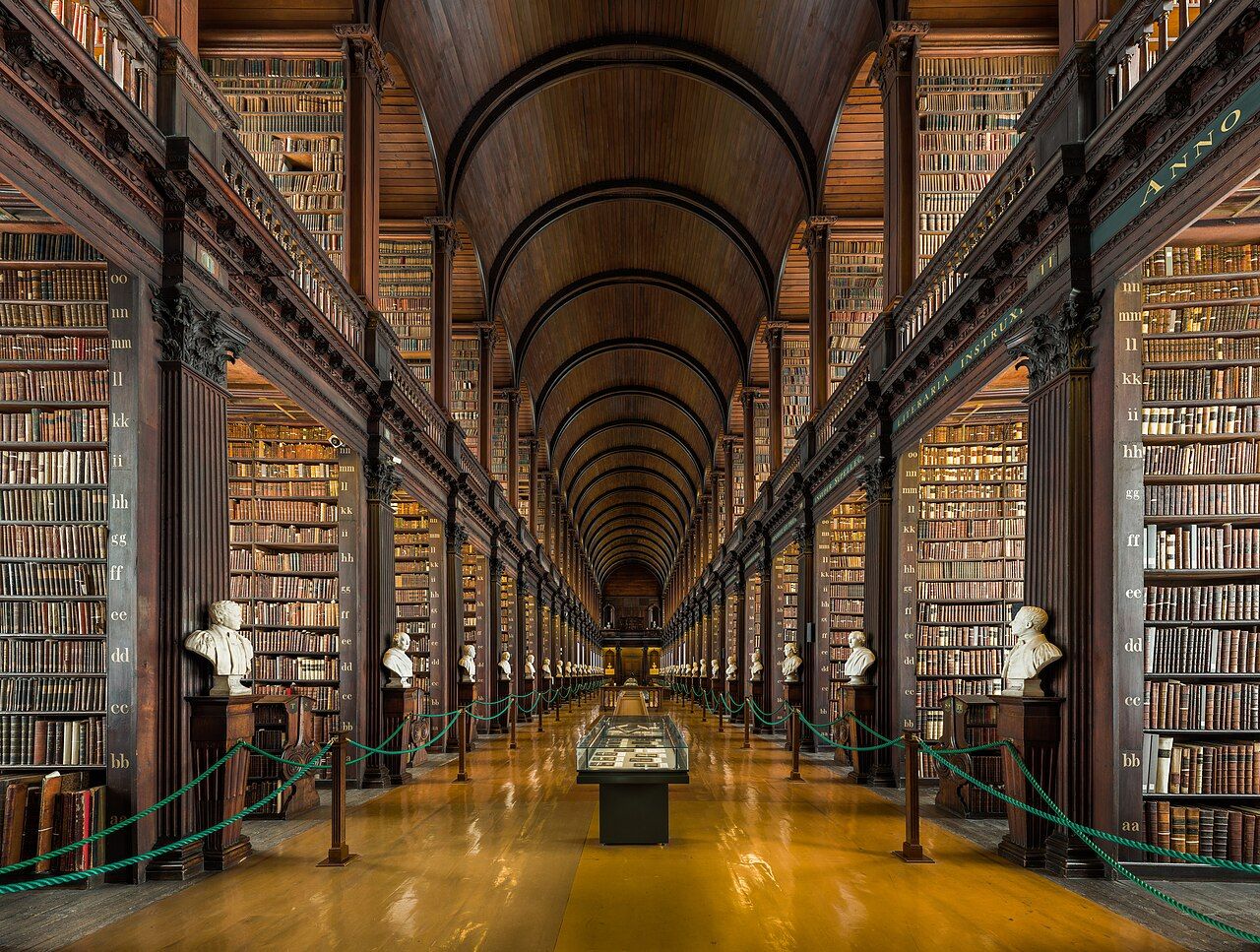
Most fortnights in Ireland begin in Dublin, and the city rewards a slow start. The centre is compact, flat and easy to walk: from Trinity College to St Stephen's Green is ten minutes, from the Green to Merrion Square another ten, and the River Liffey runs through the middle so you rarely lose your bearings. Two days is enough to see the essentials without rushing, shake off the flight, and get used to showers that tend to come and go within the hour.
Trinity College and the Book of Kells
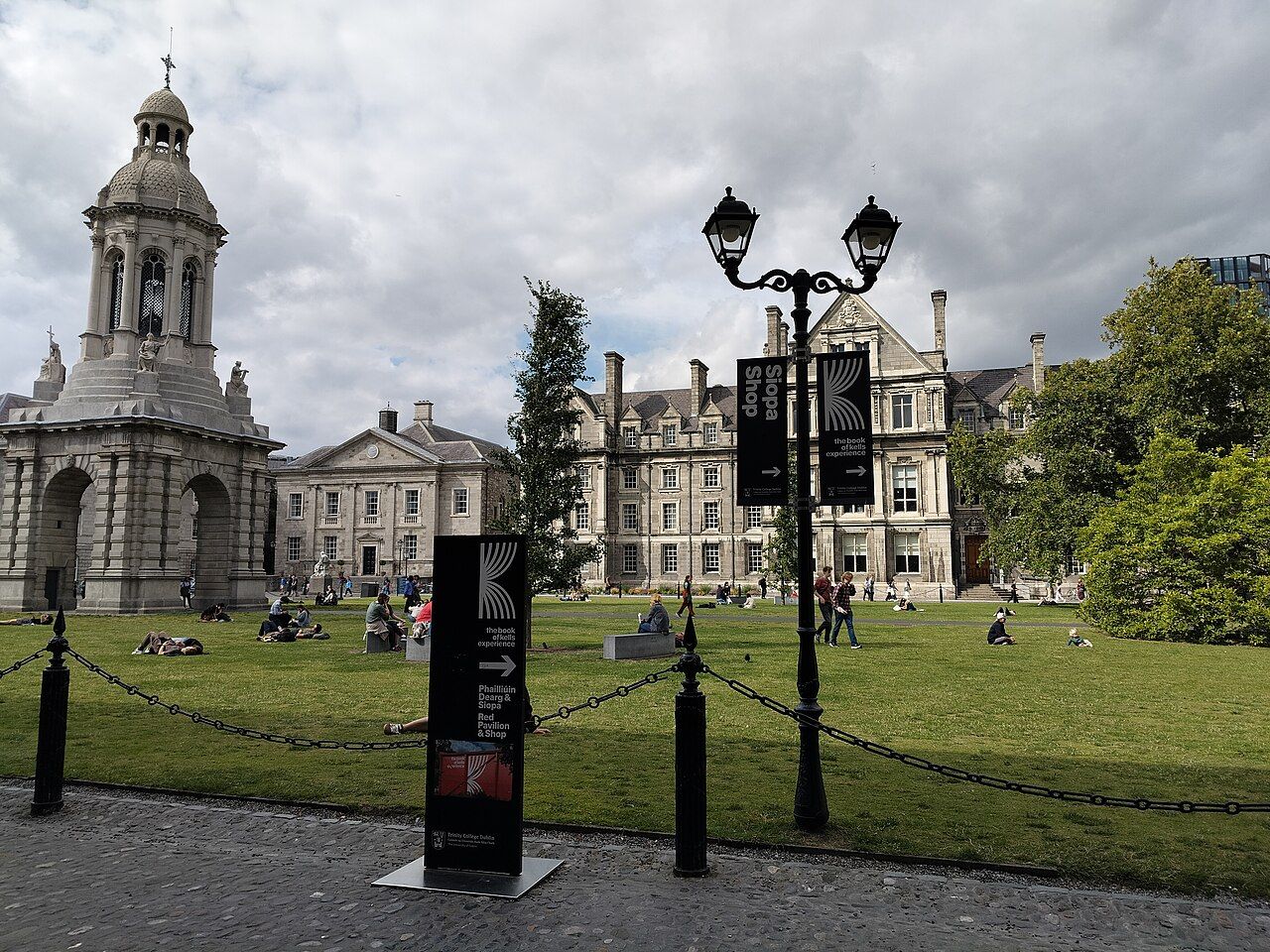
Trinity College was founded in 1592, and its cobbled squares still feel set apart from the traffic on College Green outside the front gate. You can wander the grounds freely: Front Square, the Campanile, the lawns of Library Square where students sit out on any dry afternoon. The paid part is the Old Library, and this is the one ticket in Dublin worth booking before you arrive, because entry runs on timed slots and summer days sell out.
The Book of Kells is a Latin copy of the four Gospels made around the year 800, most likely begun by the monks of Iona and finished or kept at the monastery of Kells in County Meath. Only a page or two is on show at any time, turned regularly, under low light behind glass. Look closely at the margins: cats, mice, knotted beasts and tiny human figures fill the gaps between the words. The rooms before the manuscript explain how calfskin vellum was prepared and how the inks were made, and they are worth your time because they make the open pages make sense.
Upstairs is the Long Room, sixty-odd metres of dark oak shelving under a barrel-vaulted ceiling, lined with marble busts of writers and scholars. A long conservation project has been taking books off the shelves for cleaning and repair, so the room may look emptier than in older photographs.

Georgian Dublin: squares, doors and the Green
South and east of Trinity lies the Dublin built in the eighteenth century, when it was one of the largest cities in Europe and the Irish Parliament sat on College Green. The terraces are plain red brick, four storeys high, with the decoration saved for the doorways: painted doors, slim columns and semicircular fanlights. Merrion Square is the best place to see them. The park in its middle is public, and at its north-west corner a statue of Oscar Wilde lounges on a rock opposite his childhood home at No. 1. Fitzwilliam Square, a few streets south, is smaller and better preserved; its garden is private, but the houses are the point.
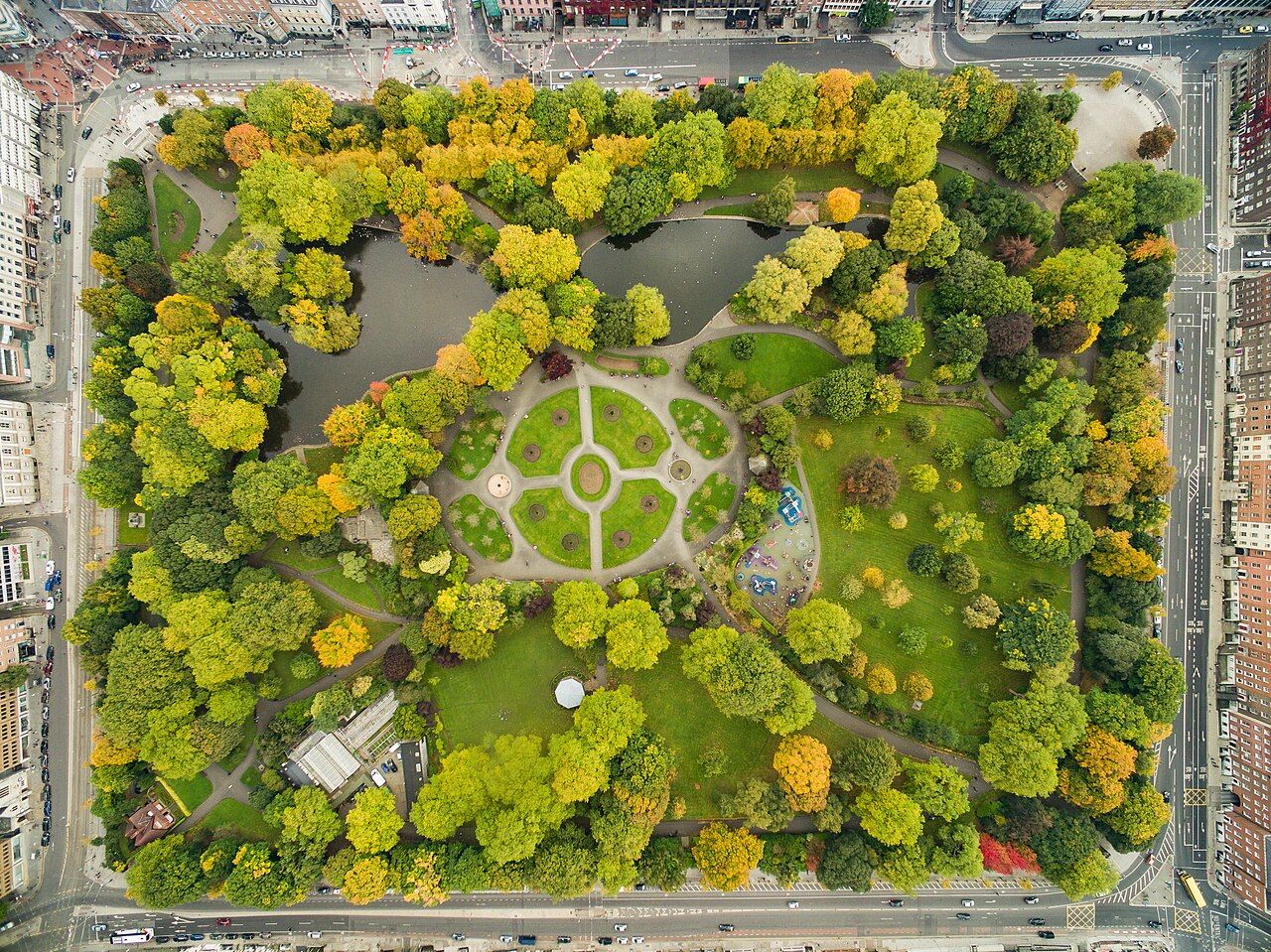
St Stephen's Green is the city's front garden, opened to the public in 1880, with a lake, a bandstand, flower beds and plenty of benches. From the air it is a neat rectangle of trees; at ground level it is the place to sit for half an hour between museums. Grafton Street runs north from its corner toward Trinity, busy with buskers from late morning, and the quieter Iveagh Gardens sit behind high walls just south of the Green.

Look closely at the margins: cats, mice, knotted beasts and tiny human figures fill the gaps between the words.A detourDublin's history, from Kilmainham to Glasnevin
Museums, free and paid
Dublin is generous with its national collections. The national museums and the National Gallery are free to enter, though some special exhibitions charge, and opening days and hours vary through the year.
- National Museum of Ireland, Archaeology, on Kildare Street: prehistoric gold, the Ardagh Chalice, the Tara Brooch, and bog bodies preserved for more than two thousand years in peat.
- National Gallery of Ireland, on Merrion Square: Irish painting from Jack B. Yeats back through the centuries, and a strong European collection.
- Natural History Museum, on Merrion Street: a Victorian hall of mounted animals and skeletons, giant Irish deer among them, barely changed in a century.
- Chester Beatty, in the grounds of Dublin Castle: manuscripts, prints and rare books from across Asia, the Middle East and Europe.
- Hugh Lane Gallery, on Parnell Square: modern and contemporary art, and the painter Francis Bacon's studio, moved here from London piece by piece.
The paid sights are mostly historic buildings with guided or timed entry: the state apartments of Dublin Castle, the two medieval cathedrals of Christ Church and St Patrick's, and Kilmainham Gaol, which needs its own half-day and is covered in the Dublin history walk.
Along the Liffey
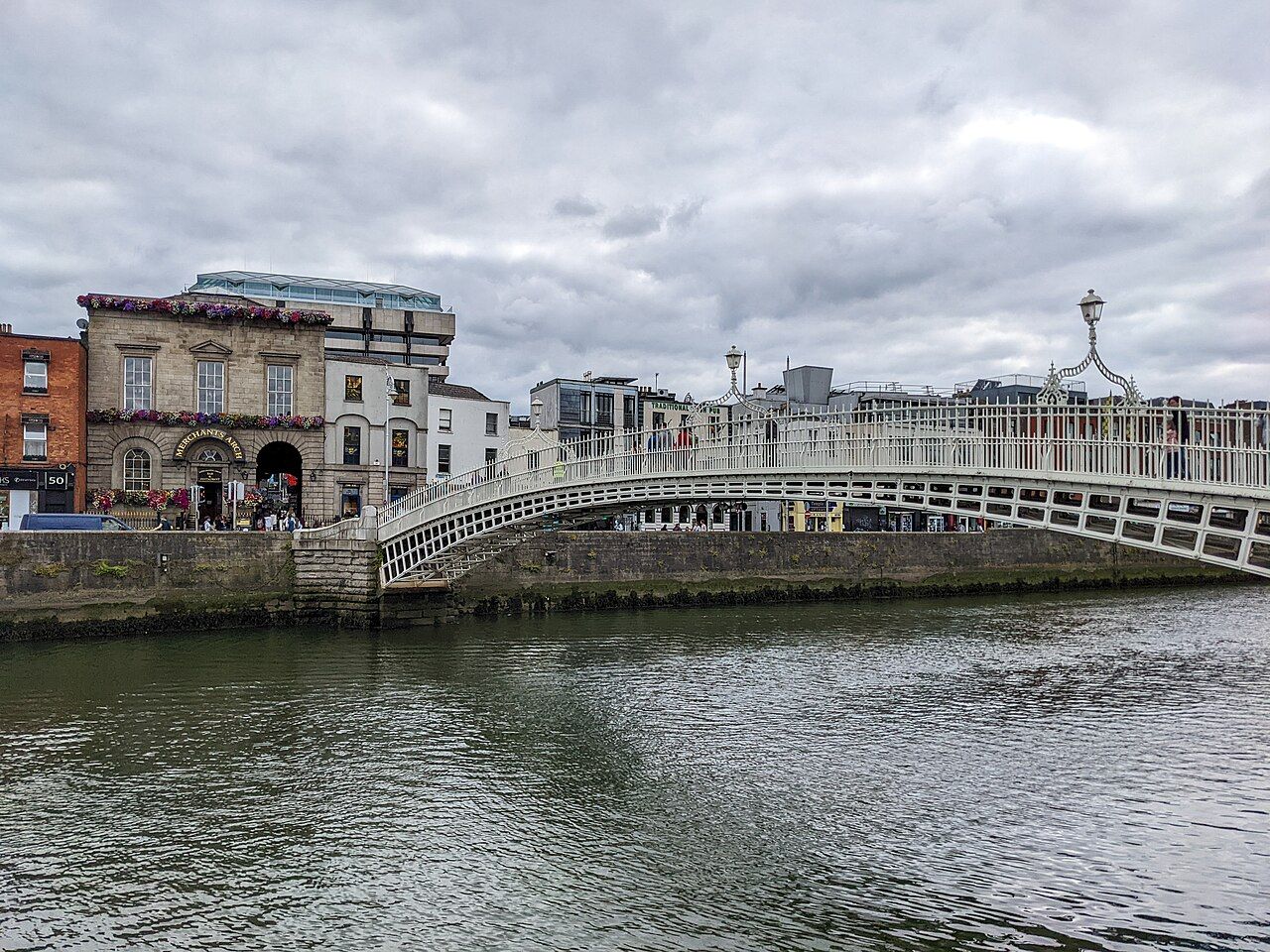
The river divides the city into Southside and Northside, and a walk along its quays is the easiest way to read the layout. Start at the Ha'penny Bridge, a cast-iron footbridge from 1816 named after the halfpenny toll once charged to cross it. Upstream you pass the Four Courts with its green copper dome; downstream, past O'Connell Bridge, is the Custom House. Both were designed by the eighteenth-century architect James Gandon, and both were badly burned in the fighting of the early 1920s and rebuilt. Further east the old docks have become glass offices, with the Samuel Beckett Bridge shaped like a harp laid on its side.

Cross to the north side for O'Connell Street, the broad main avenue, with the General Post Office halfway up and the steel Spire beside it. The Northside is less polished than the streets around Grafton Street and more lived in: the fruit and fish stalls of Moore Street, the Georgian houses of Parnell Square, and the Garden of Remembrance beside the Hugh Lane.
Shaping the two days
A plan that works for most people: on the first morning, Trinity at your booked slot, then the Archaeology museum a few minutes away on Kildare Street, lunch, Merrion Square and the National Gallery, and an evening walk along the river. On the second day, Dublin Castle and the Chester Beatty in the morning, Christ Church Cathedral, then west to Kilmainham in the afternoon. If either day is fine, take the DART along the bay to Howth for the cliff path around the headland, or to Dún Laoghaire for a walk on the long granite pier; both are well under an hour from the centre.
Evenings are easy. Music sessions start in pubs across the city most nights, and the page on hearing traditional music explains how they work and how to behave. On day three you can head north to the passage tombs of Newgrange or south into the mountains at Glendalough, both comfortable day trips. If you are collecting a hire car, do it as you leave rather than on arrival: city parking is scarce and dear, and the guide to trains, buses and driving on the left sets out what works where.