Newgrange and the tombs of the Boyne valley
Five thousand years ago farmers in a bend of the River Boyne built tombs so precise that the midwinter sunrise still reaches their inner chamber. Here is how to see them.
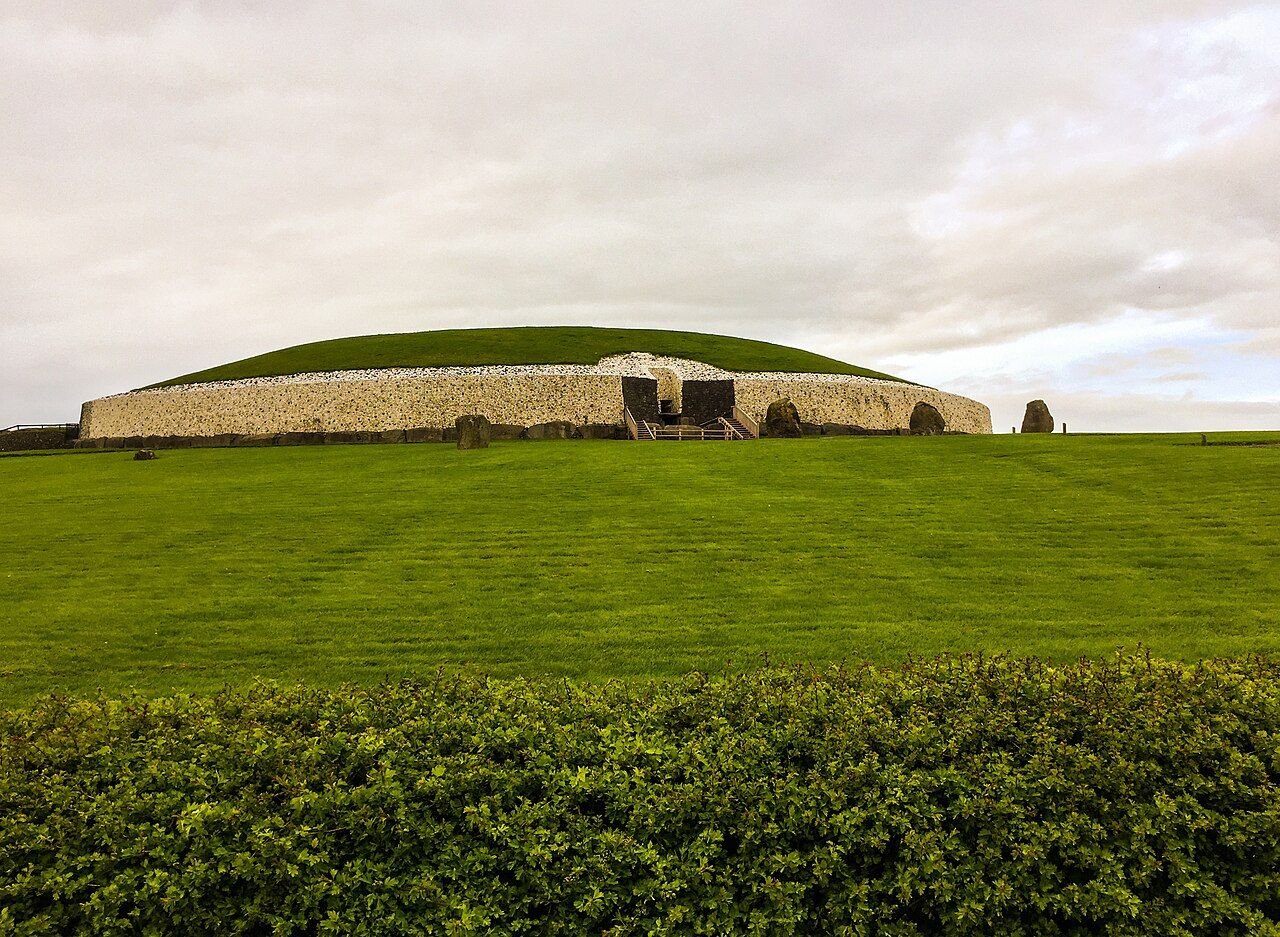
In a loop of the River Boyne, about fifty kilometres north of Dublin, three great mounds and dozens of smaller ones sit on low ridges above the water. Together they are Brú na Bóinne, the palace or mansion of the Boyne, and they are among the oldest built places in Europe. Newgrange is the most famous, Knowth the largest and richest in carving, Dowth the least visited. Together with the land around them they became a World Heritage Site in 1993, and a half-day here is the best introduction you will get to the deep past of the country you are about to drive around.
Older than the pyramids
Newgrange was built around 3200 BC, some five centuries before the Great Pyramid of Giza and well before the stone circle at Stonehenge took shape. The people who raised it were farmers who had been working the rich Boyne soil for generations. They moved some two hundred thousand tonnes of earth and stone, brought quartz from the Wicklow Mountains to the south and granite cobbles from the coast to the north, and set a ring of ninety-seven great kerbstones around the base, many of them carved.
The mound is roughly eighty-five metres across. A passage about nineteen metres long runs into its heart and opens into a cross-shaped chamber with three recesses, roofed by a corbelled vault: flat slabs laid in rings, each overlapping the one below, until a single capstone closes the top six metres above your head. It has kept the chamber dry for five thousand years. Above the entrance is the roof-box, a slot built so that at sunrise around the winter solstice a narrow beam of light travels up the passage and lights the chamber floor for about seventeen minutes.
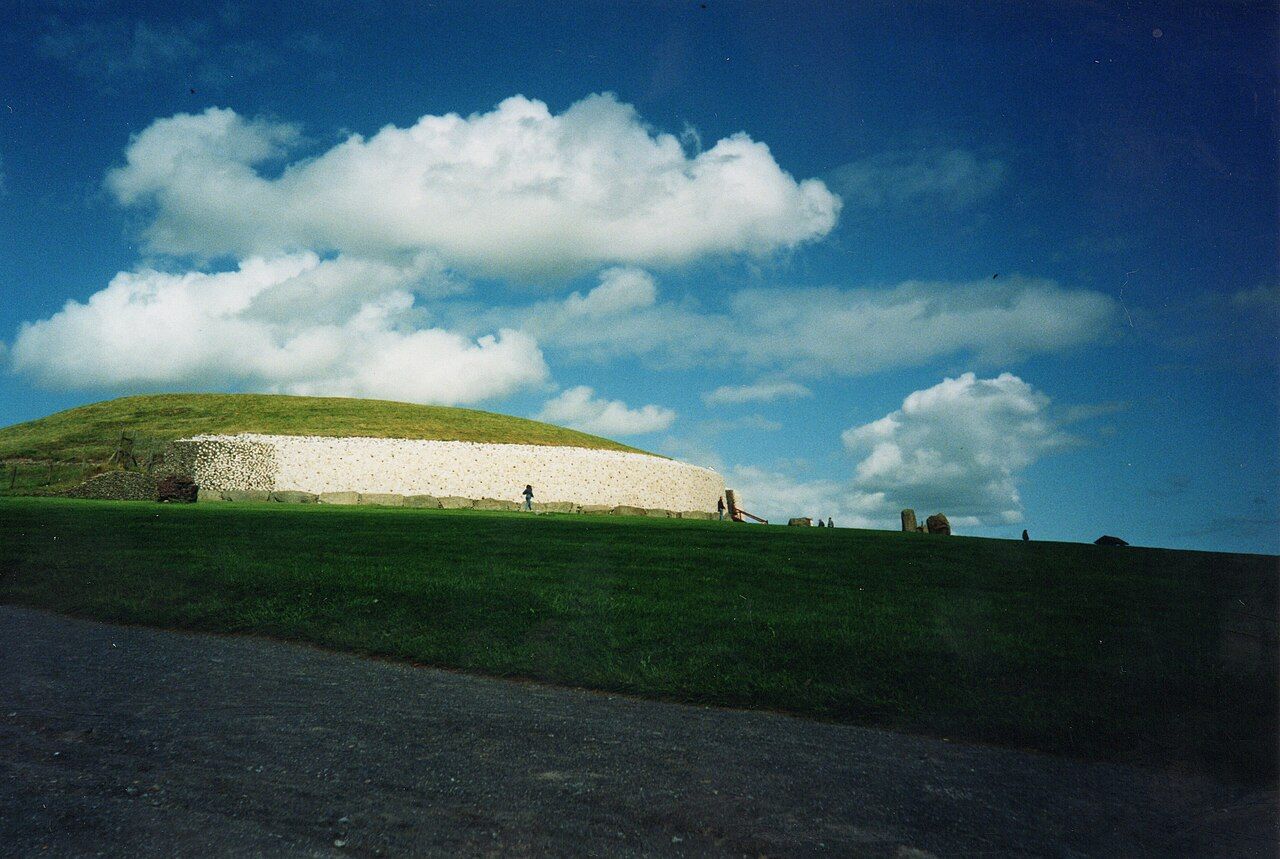

Nobody knows exactly what the builders believed. Burnt and unburnt human bones were found in the recesses, so the mound was a tomb, but the care spent on the light suggests a temple and a calendar too.
The honest answer at Newgrange is that the stones are better understood than the people who placed them.The honest answer at Newgrange is that the stones are better understood than the people who placed them.
How a visit works
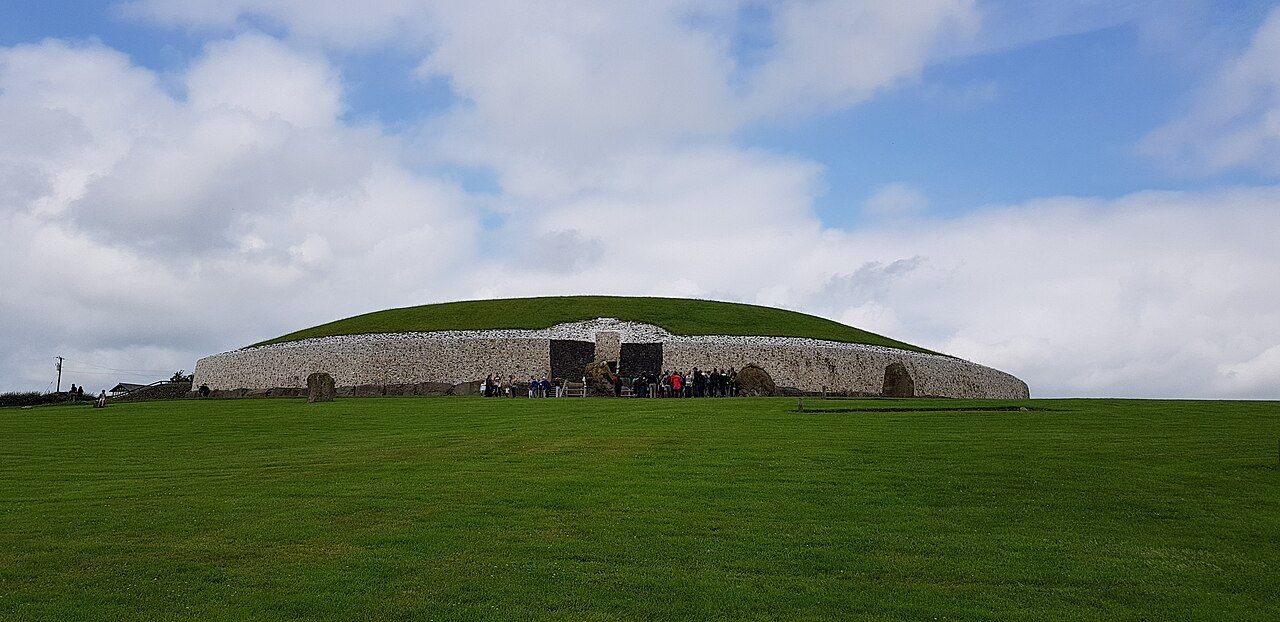
You cannot drive to the tombs. Every visit to Newgrange and Knowth starts at the Brú na Bóinne Visitor Centre on the south side of the river, where tickets are sold and an exhibition explains the builders, the farming year and the art. From there you walk across a footbridge over the Boyne and take a shuttle bus to whichever tomb your ticket names. Tours run on fixed times, and in summer the day's places can be gone by late morning, so arrive early or book ahead where advance tickets are offered.
Allow at least two hours for Newgrange alone and three or more for both tombs. The site is open all year, though Knowth closes for part of the winter; winter also means fewer people and a lower sun that suits the place.
Inside Newgrange
Before you go in, stop at the entrance stone. Its triple spirals, cut with stone tools, have become the most copied image of prehistoric Ireland, and seeing the real thing at knee height, weathered and slightly asymmetric, is a different experience from the souvenirs. The white quartz wall on either side was rebuilt during excavations between 1962 and 1975, and archaeologists still argue over whether the original front ever stood so tall and bright.
A detourTrains, buses and driving on the leftGroups of around twenty go in at a time. The passage is narrow and in places low, and you will walk with your shoulders turned between the upright stones. In the chamber the guide switches off the lights and an electric bulb imitates the solstice beam creeping up the floor. It is a modest effect, and still a striking one. Photography rules inside vary, so ask the guide. People who are uncomfortable in tight spaces can stay outside and walk round the kerb, which is worth doing in any case for the carved stones at the back.

Knowth and Dowth
Knowth is the larger mound, with two passages back to back, one facing east and one facing west, and around eighteen smaller satellite tombs gathered round it like chicks. Its kerbstones and passages carry about a third of all the megalithic art known in western Europe: spirals, lozenges, concentric arcs and wavy lines, some of them on the backs of stones where nobody was meant to see. You do not go deep into Knowth's passages, but you can climb a path to the top of the main mound for a view across the whole bend of the river.
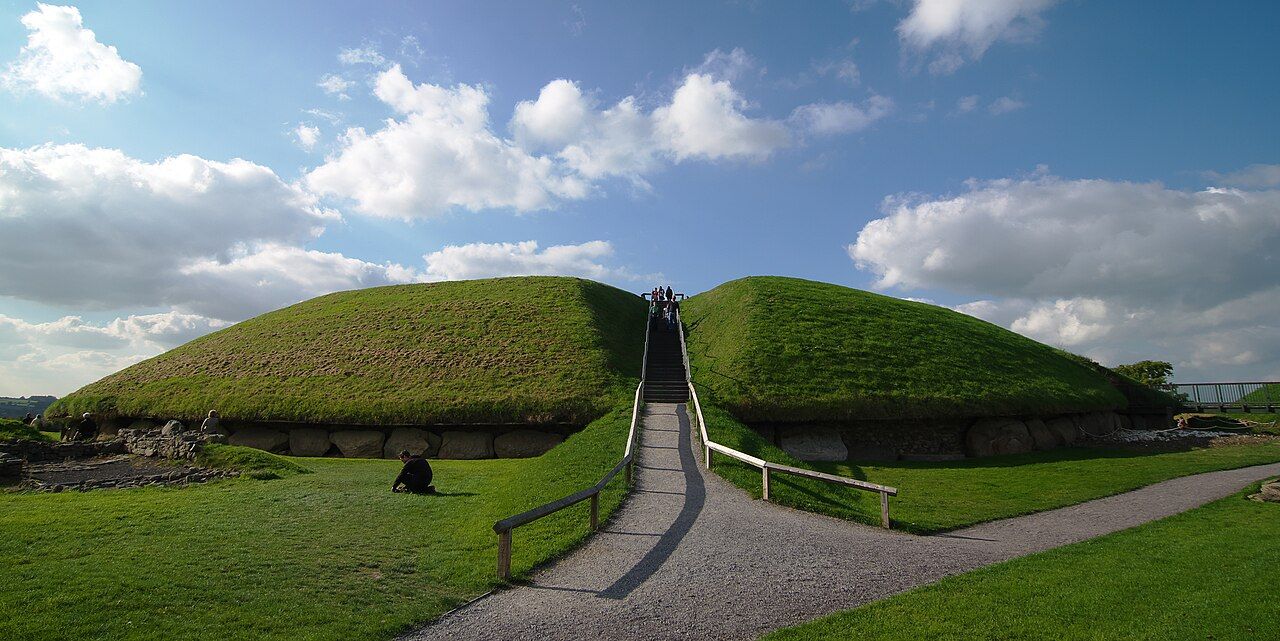

Knowth also shows how long the place stayed in use. Iron Age people dug defensive ditches into the mound, early medieval farmers built houses and underground passages on its top, and Normans later raised a structure there too.
The solstice lottery and the rest of the valley
Each December, on the mornings around the solstice, a small number of people are allowed into the chamber at Newgrange at dawn. Places are given out by a free lottery: you fill in a form at the visitor centre or apply by the method the centre lists, the draw is held each autumn, and the winners are notified. Many thousands apply for very few places, and even the winners depend on the Irish sky, which is cloudy more mornings than not in December. If you are in Ireland then, crowds also gather outside to watch the sunrise over the valley, which needs no ticket at all.
The rest of the Boyne valley repays a slower day. The site of the Battle of the Boyne, fought in 1690 between the armies of James II and William of Orange, has a visitor centre at Oldbridge a few minutes away. The Hill of Tara, seat of the high kings in legend, is a grassy hill with earthworks half an hour south. To the north stand the high crosses of Monasterboice and the ruins of Mellifont, the first Cistercian abbey in Ireland. Back in Dublin, the gold in the National Museum makes more sense after a day here; the museums are covered in Dublin in the first two days. Ireland has older and humbler tombs too, such as the portal tomb of Poulnabrone in the Burren, and a monastic site that belongs to the same story told much later at Glendalough.