Hearing traditional music: how a session works
A session is not a concert. Knowing how the tunes run in sets, who leads, when to stay quiet and where the music is strongest turns a night out into something more.
What a session is
An Irish traditional music session, a seisiún, is a gathering of musicians who play together for the love of it. They sit around a table or in a corner, often in a pub, and play tunes that most of them learned by ear from other players. There is no stage, no setlist and usually no microphone. Some sessions have a core of regular players who are paid a little by the house to make sure someone turns up; others are entirely informal, and anyone who knows the tunes and the etiquette might join in.
That is different from the music nights put on for visitors, where a group performs songs and tunes to an audience, often with a microphone and a bit of patter between numbers. Both can be enjoyable.
Tunes, sets and the shape of a night
Most session music is dance music, even though nobody is dancing. The main tune types are the reel, fast and in 4/4 time; the jig, with its rolling triplet feel in 6/8; the slip jig, in 9/8; the hornpipe, slower and bouncier; and the polka and the slide, which are especially common in the south-west. Each tune is usually short, played two or three times through, and the musicians link two or three tunes together into a set, changing from one to the next without stopping.
Someone usually leads each set, starting the first tune and deciding when to change. The others follow, picking up the next tune within a bar or two. Watching how the musicians signal the changes, a nod, a look, a shouted word, is half the pleasure. Between sets there is talk, a drink and a pause before someone starts again. Now and then a player will take a slow air, a melody played freely without a dance rhythm, often derived from an old song.
The instruments
The fiddle is the most common instrument in most sessions. You are also likely to see the tin whistle, the wooden flute, the button accordion and the concertina, a small hexagonal squeezebox especially associated with County Clare. The tenor banjo and the guitar often add rhythm and melody, and the Irish bouzouki, a long-necked string instrument adopted from Greece in the 1960s, provides a ringing accompaniment.
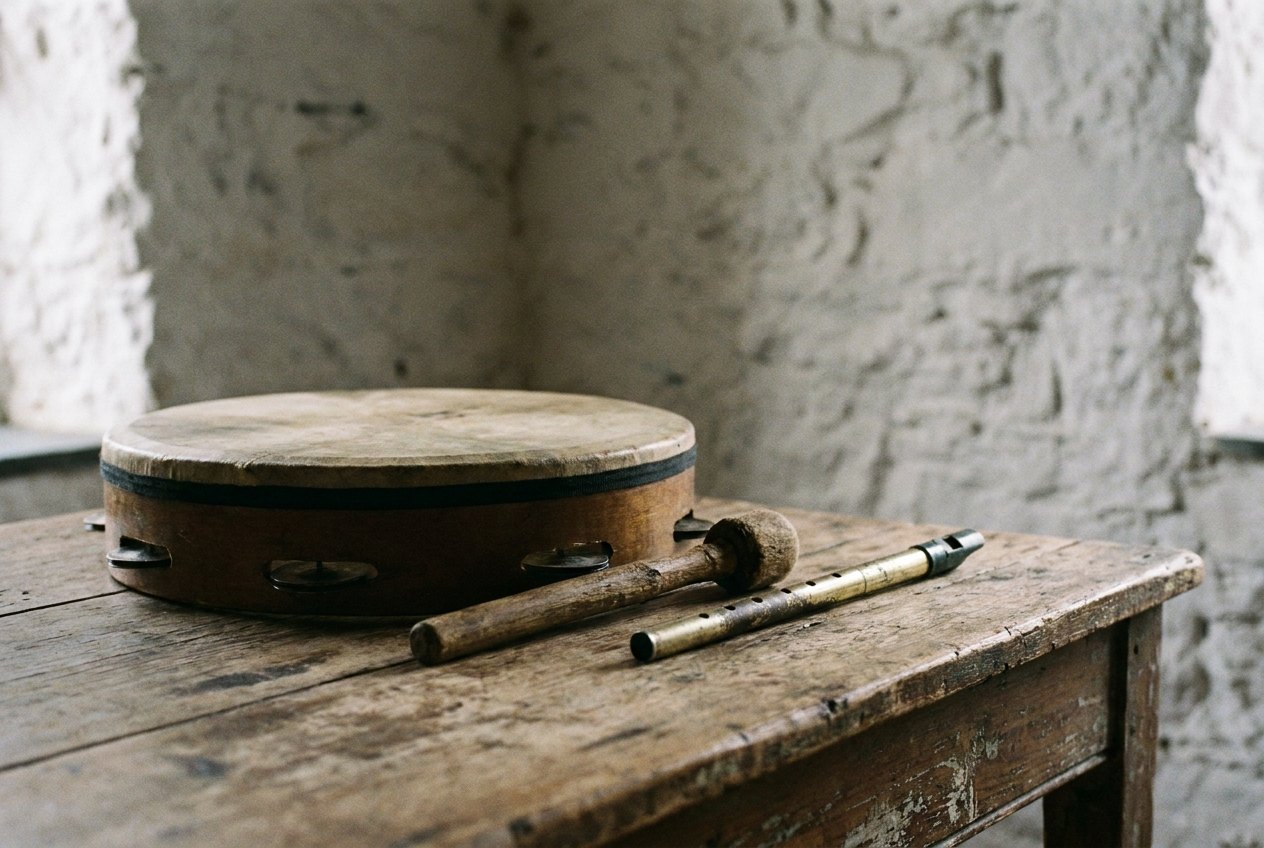
The uilleann pipes are the most complex instrument in the tradition. Unlike the Scottish bagpipes, they are blown by a bellows under the player's arm, and they have a softer, sweeter tone, with drones and keyed regulators that the player can use to add chords. A good piper is worth going out of your way for. The bodhrán, a frame drum played with a small wooden stick, gives the beat, and in a good session there is rarely more than one.
A detourThe Cliffs of Moher and the BurrenSongs and the quiet
At some point in the night, someone may start to sing. It might be a ballad in English or a song in Irish in the sean-nós style, unaccompanied and highly ornamented. When a song begins, the room is expected to go quiet. Musicians put down their instruments, conversations stop, and if the noise does not stop, someone will shush the room. This quiet is one of the most striking things about a good session, and joining it is the easiest way to show respect.
Songs are often long, and many tell stories of emigration, love, rebellion or the sea. Some will be in Irish, especially in the Gaeltacht areas of the west, and you do not need to understand the words to feel the weight of them.
Etiquette for listeners
- Do not sit in a seat at the musicians' table unless you are invited; those seats are kept for players.
- Keep your voice down when the music is playing, and fall silent for songs and slow airs.
- Applaud at the end of a set, not in the middle, and avoid clapping along out of time.
- Ask before taking photographs or recording, and never use a flash.
- If you play, do not just sit in. Listen for a while, talk to the players.
- Buying the musicians a drink is a traditional way of saying thanks, though it is never expected.
Where and when
Every part of Ireland has music, but some regions are especially known for it. County Clare is famous for its concertina players and its villages full of music, many of them within reach of the Cliffs of Moher and the Burren. Galway city has sessions every night of the week, while the Sliabh Luachra area on the Cork and Kerry border is known for its polkas and slides, and the Dingle Peninsula has a lively music scene of its own. Donegal has its own fiddle style, with tunes such as mazurkas and highlands not heard as often elsewhere, and County Sligo has given the tradition many of its most celebrated fiddlers.
In cities, sessions are easy to find, and Dublin has music nightly in many pubs in the centre. In the countryside, sessions may happen only on certain nights of the week, and they usually start late, often after nine and sometimes later. Arrive early enough to get a seat with a view.
Summer brings festivals across the country, from small weekend gatherings to week-long summer schools where musicians come to learn from masters. The biggest festival of all, the national fleadh, is held each August in a host town that changes every year or two, and fills the streets with music day and night. Dates and venues change each year.
Listening well
The best way to enjoy a session is to settle in, listen and let the music build. The first sets of the night are often a warm-up; the best music may not come until later, when the players have found their rhythm and the room has settled. Pay attention to the way the players listen to each other, and to the small variations each one brings to a tune. It is a living tradition, passed on from player to player, and you are welcome to be part of the audience for it.